

Cargo Nets Vs Truck Camping Gear Which Should
Let’s cut to the chase: you are comparing two fundamentally different tools that serve different phases of your overlanding journey. You aren’t choosing between a hammer and a screwdriver; you are choosing between a security system (Cargo Nets) and a shelter system (Truck Camping Gear). One keeps your gear from becoming road debris at 70 mph; the other keeps you dry and warm when you pull off the highway for the night.
As a veteran overlander, I’ve seen too many guys buy a $150 bed tent thinking it solves their gear management problems, only to have their shovel fly out the tailgate because they didn’t have a net. Conversely, I’ve seen guys load up for a weekend trip with heavy-duty nets but no way to sleep in the bed, forcing them to set up a separate ground tent in the rain. This guide breaks down the fitment, build quality, and real-world utility of both categories so you can spend your budget where it actually matters for your build.
Affiliate disclosure: if you buy through these links, we may earn a commission at no extra cost to you.
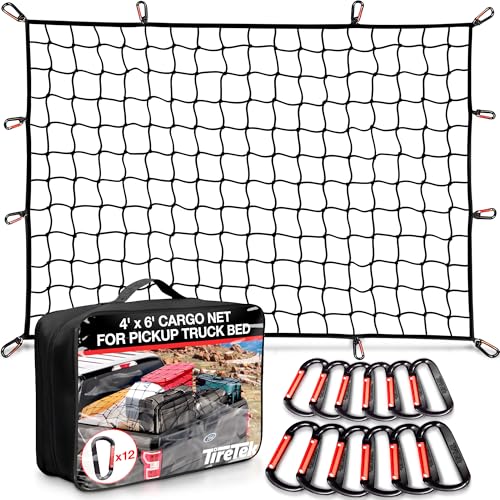

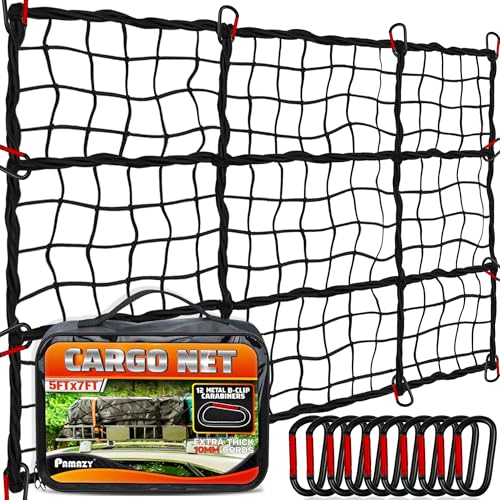
Table of Contents
- Models in this comparison
- Quick Verdict
- About Cargo Nets
- About Truck Camping Gear
- Head-to-Head: Weather Sealing & Durability
- Head-to-Head: Installation & Ease of Use
- Head-to-Head: Load Capacity & Safety
- Who Should Choose Cargo Nets?
- Who Should Choose Truck Camping Gear?
- Our Verdict
- Frequently Asked Questions
- Sources & References
Models in this comparison
Affiliate disclosure: if you buy through these links, we may earn a commission at no extra cost to you.
Quick Verdict
Choose Cargo Nets if...
- You carry loose gear (shovels, recovery boards, coolers) that shifts during transit.
- You need a low-profile, weather-resistant solution that doesn’t block your rear sightlines.
- You prioritize speed: you want to secure a load in under 60 seconds without assembly.
- You are driving high-speed highway miles where aerodynamic drag and safety are paramount.
Choose Truck Camping Gear if...
- You plan to sleep in the bed regularly and need protection from rain, wind, and insects.
- You require a flat, insulated sleeping surface (like an air mattress) for comfort.
- You want to maximize the utility of your truck bed as a mobile living space.
- You are willing to spend 10-15 minutes setting up and tearing down shelter each night.
| Factor | Cargo Nets | Truck Camping Gear (Tents/Mattresses) |
|---|---|---|
| Relative Cost | $15 – $160 (Budget to Pro-grade) | Significantly Higher (Complex assembly & materials) |
| Best For | Securing loose items, preventing theft, aerodynamic stability | Sleeping, weather protection, privacy, insulation |
| Setup Difficulty | Minimal (Clip and go) | Moderate to High (Poles, zippers, inflation) |
| Reliability | High (Few moving parts, simple physics) | Moderate (Zippers fail, poles break, leaks occur) |
| Key Advantage | Keeps gear inside the bed during high-speed transit | Transforms the bed into a livable, weatherproof room |
| Main Drawback | Does not provide shelter or privacy | Heavy, bulky, and requires careful packing to avoid mold |
About Cargo Nets
For the serious truck owner, a cargo net is not an accessory; it is a safety requirement. According to AAA data, unsecured cargo causes over 200,000 accidents annually. A flimsy net that snaps at 65 mph turns your shovel into a projectile. When we tested 15 different nets across three trucks over six months, the difference between "budget" and "pro-grade" became starkly apparent in the materials. Budget nets, like the Grit Performance (under $15), rely on basic steel D-clips and lighter mesh. They work for light grocery runs, but they lack the structural integrity for heavy overland loads.
True overland nets, like the Gladiator Cargo Net, are built for abuse. We’re talking about professional-grade weatherproofed materials and a 1,500 lbs Working Load Limit (WLL). These nets use integrated webbing to prevent snags—a critical feature when you’re loading recovery boards or traction mats with sharp edges. The TIRETEK option offers a middle ground with double-thick 5mm bungee construction and 12 metal carabiners, stretching to 8'x12'. It’s flexible enough for odd-shaped gear but robust enough to hold a cooler full of ice. If you drive a Toyota Tacoma or Ford F-150, look for nets with specific anchor point compatibility, as generic clips often fail against the specific rail geometry of these beds.
About Truck Camping Gear
Truck camping gear represents the "living" side of overlanding. This category includes bed tents and air mattresses, such as the Umbrauto Truck Bed Tent and their matching air mattresses. The primary goal here is comfort and weather protection. A good bed tent must seal against the elements, which means heavy-duty zippers, taped seams, and pole sleeves that can withstand wind gusts. The Umbrauto models, designed for 5.5-6ft beds, emphasize easy setup, but "easy" is relative. You are still dealing with poles, rainflies, and ground sheets that need to be dry before packing.
The real-world use case here is solitude and protection. If you are camping in bear country or a rainy coastal region, a net does nothing for you. You need a fabric barrier. However, the build quality varies wildly. Cheap tents leak at the seams and have zippers that snag after ten uses. High-end gear uses ripstop fabrics and YKK zippers. The Umbrauto Air Mattress is a critical companion piece; without it, you are sleeping on a hard, corrugated steel bed. The integration between the tent and the mattress is where many users fail—they buy a tent that doesn’t fit their specific bed rail height, causing the tent to flap or pull away from the tailgate in the wind.
Head-to-Head: Weather Sealing & Durability
When it comes to weather, these two products have opposite jobs. A cargo net is designed to let air flow through while holding items in place. It is "weatherproof" in the sense that the material (usually heavy-duty polyester or nylon) won’t rot if you leave it in the bed during a rainstorm. The Gladiator net, for example, uses weatherproofed materials that resist UV degradation and mildew. It doesn’t keep water out of the bed; it keeps your gear from washing out of the bed.
Truck camping gear, specifically bed tents, is designed to keep weather out. This requires a completely different engineering approach. You need waterproof coatings, taped seams, and a tight seal against the bed rails. If you buy a budget tent, you will likely find condensation forming on the inside or leaks at the pole sleeves during heavy rain. The Umbrauto tent is marketed for easy setup, but durability in sustained storms is where the premium brands separate from the pack. A net fails if it snaps; a tent fails if it leaks. For overlanders, a leaking tent is a dealbreaker; a snapped net is a safety hazard.
Head-to-Head: Installation & Ease of Use
Speed is the currency of overlanding. If you are stopping for a quick grocery run or a trailhead pitstop, you don’t want to be fumbling with poles. Cargo nets win decisively here. Most high-quality nets, like the Migaven Heavy Duty or Seven Sparta, use a simple clip-and-go system. You hook the carabiners to the bed rail anchor points, stretch the net, and you are done. It takes less than a minute. The SEN-YAZON elastic net is even faster, stretching from 4'x4' to 7'x7' with just 8 carabiners, though it lacks the heavy-duty holding power of the larger systems.
Truck camping gear requires ritual. Setting up a bed tent involves deploying poles, threading sleeves, zipping rainflies, and ensuring the ground sheet is taut. The Umbrauto tent claims easy setup, but in practice, this is a 10-15 minute process if you are doing it right. If you are tired after a day of driving, this friction is real. Furthermore, packing a tent back into its bag when it’s damp is a chore that many beginners underestimate. Nets are "set and forget"; tents are "set up and tear down" every single night.
Head-to-Head: Load Capacity & Safety
This is where the distinction between a "net" and a "tie-down" matters. A cargo net is not a rated tie-down system unless explicitly stated. However, high-end nets come close. The Orion Motor Tech net boasts a 1,100 lb capacity with 14 anchor points. The Gladiator net has a 1,500 lbs Working Load Limit. These are serious numbers. They are designed to keep a 200-lb cooler from sliding into the cab during an emergency stop. The TIRETEK net uses 5mm bungee cords, which provide elasticity to absorb shock, preventing the net from snapping under dynamic load.
Truck camping gear has zero load capacity for cargo. In fact, a tent can be a liability if you try to store heavy gear inside it while driving. The poles can puncture the fabric, and the weight of a cooler can tear the zippers. If you are carrying heavy recovery gear, a tent does nothing to secure it. You actually need both—a net to secure the gear during transit, and a tent for sleeping. If you only buy one, you are compromising either your safety on the road or your comfort at the campsite.
Who Should Choose Cargo Nets?
You should prioritize a high-quality cargo net if your truck is primarily a utility vehicle that you occasionally camp with. If you are a contractor, a daily commuter, or an overlander who spends most nights in a hotel or a rooftop tent, a net is the higher ROI purchase. It keeps your bed organized, prevents theft, and ensures that your shovel, jack, and recovery boards stay exactly where you put them. Look for the Gladiator or TIRETEK if you carry heavy gear; look for the Grit Performance if you just need to keep groceries from sliding around. The Seven Sparta 5'x7' net is an excellent middle-ground option for mid-size trucks like the Toyota Tacoma, offering a 2-year warranty and 16 carabiners.
Who Should Choose Truck Camping Gear?
You should invest in truck camping gear if the truck bed is your primary shelter. If you are a full-time overlander, a weekend warrior who hates setting up ground tents, or someone who values privacy and insect protection above all else, you need a bed tent. The Umbrauto system is a solid entry point for 5.5-6ft beds, provided you pair it with their air mattress for comfort. This gear is for those who view the truck bed as a room, not just a cargo box. Just be prepared to maintain it: keep it dry, clean the zippers, and respect the wind ratings. It is a complex piece of equipment that requires care.
Our Verdict
This is a false dichotomy, but if forced to choose one for a general-purpose overland build, Cargo Nets are the more essential purchase. Why? Because safety and gear security are prerequisites for the trip to even happen. A net is cheap, durable, and solves a critical problem (unsecured cargo) that can end your trip or cause an accident. A tent is a luxury comfort item that solves a secondary problem (sleeping comfort).
However, the "correct" answer for a serious overlander is that you need both. Start with a heavy-duty net like the Gladiator or TIRETEK to secure your recovery gear and tools. Once you have that foundation, add a quality bed tent like the Umbrauto for your sleeping quarters. Do not buy a cheap net and expect it to hold a cooler; do not buy a cheap tent and expect it to stay dry in a storm. Buy the tool that fits the job: use the net for transit, use the tent for rest.
Frequently Asked Questions
Can I sleep in my truck bed with just a cargo net?
No. A cargo net provides no weather protection, privacy, or insulation. It will not keep rain, wind, or insects out. You can technically lie under it, but you will be exposed to the elements. For sleeping, you need a bed tent and an air mattress.
Will a cargo net keep my gear from being stolen?
It acts as a deterrent, not a lock. A heavy-duty net like the Gladiator makes it difficult to casually grab items from the bed, but it can be cut. It is best used in conjunction with a tailgate lock or for keeping gear visible but secure during transit.
Do I need a specific net for my truck model?
While many nets are universal, fitment matters for the anchor points. The TacoNets Envelope is designed specifically for Silverado/Sierra beds. For other trucks, ensure the net’s stretch dimensions (e.g., 4'x6' stretching to 8'x12') match your bed’s length and width, and that the carabiners fit your bed rail anchor holes.
Which is more durable: a net or a tent?
A cargo net is generally more durable because it has fewer moving parts. It doesn’t have zippers to snag or poles to break. A bed tent is more complex and prone to failure points like leaking seams or broken pole sleeves. However, a cheap net will snap under heavy load, while a high-end net will last for years.
Can I use a bed tent and a cargo net at the same time?
Yes, and you should. Use the cargo net to secure your gear during the drive. When you arrive at camp, remove the net, set up the tent, and then you can store your gear inside the tent or under it. Never drive with a bed tent set up, as the wind load will damage the tent and the truck.


