

Overland Truck Vs Bed Slide Trays Which Should
Overland truck bed racks and bed slide trays solve two very different problems. A rack creates vertical cargo capacity for tents, recovery boards, awnings, fuel cans, and other overland equipment. A slide tray keeps cargo low in the bed but brings it toward the tailgate, making tools, coolers, camp kitchens, and recovery gear easier to reach.
That distinction matters before you compare prices or product names. The JOYTUTUS, TRUMGETA, and VEVOR products listed for the overland-truck category are bed-rack systems, while the BEDSLIDE, MORryde, Rough Country, CargoGlide, and Truck Trolley products are cargo-access platforms. They are not interchangeable upgrades. Read this comparison if you are outfitting a Ford F-150, Chevrolet Silverado 1500, Ram 1500, Toyota Tacoma, Tundra, or another pickup and need to decide whether your next dollar should go toward carrying more gear or reaching the gear already in the bed.
Affiliate disclosure: if you buy through these links, we may earn a commission at no extra cost to you.
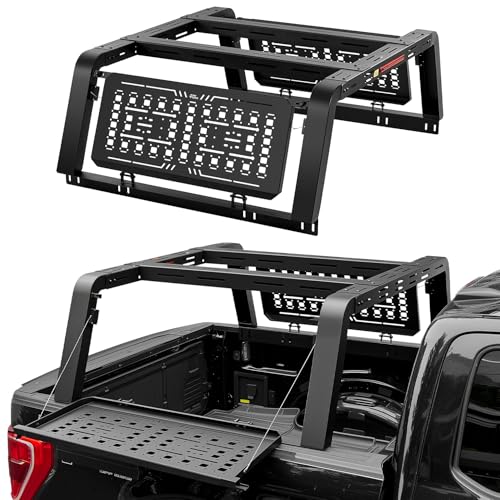


Table of Contents
- Our Top Picks
- Quick Verdict
- About Overland Truck
- About Bed Slide Trays
- Head-to-Head: Cargo Capacity and Load Placement
- Head-to-Head: Access and Organization
- Head-to-Head: Installation and Truck Fitment
- Head-to-Head: Weather Sealing and Durability
- Head-to-Head: Cost and Long-Term Value
- Who Should Choose Overland Truck?
- Who Should Choose Bed Slide Trays?
- Our Verdict
- Frequently Asked Questions
- Sources & References
- Relevant Products for This Topic
Our Top Picks
Affiliate disclosure: if you buy through these links, we may earn a commission at no extra cost to you.
Quick Verdict
Choose Overland Truck if...
- You need to carry bulky overland equipment above the bed, such as a rooftop tent, awning, recovery boards, or long cargo.
- You want to preserve the main bed floor for coolers, bins, motorcycles, firewood, or other cargo.
- Your trips depend more on added vertical and tie-down capacity than on quick access to gear packed against the cab.
Choose Bed Slide Trays if...
- Your main frustration is reaching tools, camp equipment, or storage bins at the front of the bed.
- You want a lower, more organized cargo platform with a defined load rating and locking positions.
- You frequently load heavy gear and want to pull it toward the tailgate instead of climbing into the bed.
| Factor | Overland Truck | Bed Slide Trays |
|---|---|---|
| Relative Cost | No complete rack-system price is established by the supplied information. Rack cost varies with size, mounting hardware, and accessories. | Documented options range from a Rough Country tray priced under $200 to heavy-duty systems listed at up to $1,500 capacity, according to Panoz Auto. |
| Best For | Adding elevated cargo capacity for rooftop tents, awnings, recovery equipment, and long overland loads. | Improving access to tools, camping gear, coolers, and cargo stored in the bed. |
| Setup Difficulty | Usually requires careful measurement, rail or bed-rail mounting, and sufficient clearance for the cab, tonneau, and accessories. | Ranges from portable or no-drill designs to permanently mounted platforms. U-bolt and other mounting requirements must be checked before purchase. |
| Reliability | Depends heavily on rack construction, mounting points, fastener quality, bed fitment, and the weight distribution of the load. | Depends on the platform, slide mechanism, mounting system, and staying within the rated capacity. |
| Key Advantage | Uses vertical space and increases the type and volume of equipment a pickup can carry. | Brings cargo toward the tailgate and can make the full bed substantially easier to use. |
| Main Drawback | Adds height, weight, wind exposure, and installation complexity without improving access to cargo on the bed floor. | Occupies bed-floor space and may reduce usable clearance or require permanent installation. |
About Overland Truck
In this comparison, “Overland Truck” refers to the bed-rack side of the market. A rack is the better foundation when your equipment list includes a rooftop tent, awning, traction boards, ladders, MaxTrax-style recovery boards, or other long items that do not belong loose on the bed floor. It lets you stack cargo above the bed while retaining floor space underneath.
That extra height comes with responsibilities. On a full-size Ford F-150, Chevrolet Silverado, or Ram 1500, the rack must clear the cab, antenna, rear window, and any tonneau cover. On a Toyota Tacoma or Tundra, you still need to verify bed-rail dimensions, mounting points, cab clearance, and the relationship between the rack and any tent or canopy. The product names in the overland category do not establish their fitment or load ratings, so those specifications must come from the individual listing and your truck’s measurements.
A rack is also a system rather than a single storage solution. The rack may carry elevated gear well, but it does not automatically organize recovery tools, food, tools, or camp supplies below it. Bins, tie-downs, drawer systems, and a bed liner may still be necessary. If your real problem is that the cooler and tool cases are buried against the cab, a rack alone will not solve it.
About Bed Slide Trays
A bed slide tray is a platform mounted in the pickup bed that extends toward the tailgate. Its purpose is access, not vertical storage. Most truck-bed slides provide approximately 75% extension, while premium designs can reach 100% extension, according to Panoz Auto’s cargo-slide guide. That difference is significant when heavy gear is packed against the cab.
The supplied examples cover a wide range of capacity and construction. The BEDSLIDE Classic 58×41 is listed with a 1,000-pound capacity, weather-resistant composite construction, U.S. manufacturing, and multiple locking positions. The MORryde CTG60-4290W is listed at 800 pounds and is described as fully assembled, carpeted, and mounted with U-bolts. These details make clear what to compare: not just platform length, but also the slide rating, mounting method, surface, weather resistance, and locking arrangement.
At the budget end, the Rough Country full-size slide-out tray is presented as a sub-$200 option with UV-protected HDPE construction and compatibility with bed covers or tonneau covers. At the heavy-duty end, the CargoGlide CG1500XL is listed with a 1,500-pound capacity, 100% extension, and a 75×49-inch platform. The portable Truck Trolley is described as a collapsible system with an approximately 300-pound listed capacity. Those products serve different jobs; a portable light-duty platform should not be evaluated as a substitute for a permanently mounted contractor-grade slide.
Head-to-Head: Cargo Capacity and Load Placement
Bed racks win when the truck needs to carry more kinds of equipment at once. A rack uses the space above the bed for long or bulky items and can support an overland layout built around a rooftop tent or elevated shelter. That leaves the bed floor available for lower cargo, although the rack’s own load rating and the truck’s payload limit still control what can be carried safely.
Bed slides take the opposite approach. They do not add vertical capacity; they create a more usable cargo floor. A 1,000-pound-rated BEDSLIDE or an 800-pound-rated MORryde tray may be appropriate for heavy tools or camp equipment when the load remains within the manufacturer’s limits. The critical point is to size the slide for the heaviest recurring load, not simply the largest advertised platform.
Head-to-Head: Access and Organization
A rack does little for access to cargo stored on the bed floor. It can make it easier to secure equipment at a consistent height, but reaching a case behind the cab may still require climbing into the bed or unloading the tailgate area. That is acceptable when the rack’s primary job is carrying a tent, awning, or recovery boards.
A slide tray is purpose-built for this problem. Pulling the platform toward the tailgate exposes cargo that would otherwise be buried. A 75% extension can provide a practical balance between access, capacity, cost, and remaining bed space. A 100% extension is more useful when the platform will routinely be loaded all the way to the cab, but it may bring a higher price and more demanding installation requirements.
Head-to-Head: Installation and Truck Fitment
Rack installation starts with the truck itself. Check the bed length, bed-rail design, cab clearance, tonneau-cover arrangement, and the mounting hardware specified by the rack manufacturer. A rack that fits one full-size pickup configuration may not fit another with a different bed length or rail system. The same warning applies across midsize trucks such as the Tacoma and full-size trucks such as the Tundra, F-150, Silverado, and Ram 1500.
Slides have an equally important but different fitment checklist. Confirm the inside bed dimensions, wheel-well interference, platform length, tailgate clearance, mounting points, and whether the mechanism works with your bed liner or tonneau cover. Installation can range from portable or no-drill systems to permanently mounted platforms. The MORryde example uses U-bolt mounting, while the Truck Trolley is described as collapsible and portable. “Easy installation” is not a universal category; it depends on the truck and the system.
Head-to-Head: Weather Sealing and Durability
A bed rack is exposed to weather and wind, but its durability is primarily a structural question. Inspect the rack material, joints, fasteners, mounting points, corrosion protection, and how the load will be tied down. The rack itself does not seal the truck bed. If weather protection matters, the bed cover, cargo containers, and any rooftop-tent or accessory interface must be considered separately.
Slides also do not automatically make the bed weatherproof. Their platform and hardware must tolerate moisture, dirt, and repeated movement, while the truck’s tonneau or cap handles much of the weather barrier. The BEDSLIDE is listed with weather-resistant composite construction, and the Rough Country tray is described as using UV-protected HDPE. Those are useful construction details, but they are not the same as a sealed cargo compartment. Use weather-resistant cases or bins for gear that cannot get wet.
Head-to-Head: Cost and Long-Term Value
This is not a direct component-for-component price comparison. A bed rack and a bed slide perform different functions, and the supplied information does not establish a complete rack-system price for the JOYTUTUS, TRUMGETA, or VEVOR examples. Accessories such as a rooftop tent, awning, crossbars, tie-downs, or storage boxes can also change the total cost of a rack-based setup.
The slide category has a documented spread from a Rough Country option priced under $200 to heavy-duty systems listed at up to 1,500 pounds, according to Panoz Auto’s truck bed slide platform guide. That does not make the least expensive tray the best value. A contractor carrying heavy power tools may get more useful service from a higher-rated, locking, full-extension platform, while a lighter camping load may justify a simpler 75%-extension design.
Who Should Choose Overland Truck?
Choose a bed rack if your truck is primarily a platform for overland equipment. It is the right starting point for a rooftop tent, awning, recovery boards, ladders, long cases, or other gear that benefits from elevated storage. It also makes sense when you want to preserve the bed floor for large loose cargo rather than fill it with a sliding mechanism.
Buy the rack only after confirming the exact truck configuration and intended load. Measure the bed, check the tonneau-cover plan, and account for the extra height before committing. A rack is a poor answer if your primary complaint is digging through floor-level gear.
Who Should Choose Bed Slide Trays?
Choose a bed slide if access is the bottleneck. It is especially useful for contractors, mobile technicians, hunters, campers, and truck owners who keep tools, coolers, kitchen gear, or recovery equipment in the bed every day. The platform brings the load toward you and reduces the need to climb into the truck bed.
Match the rating to the actual load and decide whether 75% extension is enough. Go toward a 100% extension model when gear commonly sits against the cab and full-bed access matters more than cost or installation simplicity. For occasional light-duty use, a portable or lower-capacity platform may be adequate, but it should not be treated as a heavy-duty slide.
Our Verdict
For most truck owners choosing only one upgrade, buy the bed slide if the problem is access and buy the rack if the problem is carrying overland equipment that will not fit efficiently on the bed floor. There is no honest way to call one universally better: a rack adds capacity above the bed, while a slide makes existing bed capacity usable.
For a working truck loaded with tools, bins, and camp supplies, the bed slide is the more immediately practical choice. A properly rated platform with locking positions and enough extension can change how the truck is used every day. For a dedicated overland build centered on a rooftop tent, awning, recovery boards, and elevated cargo, the rack should come first. Many serious builds eventually use both, but they should be added for separate reasons rather than assuming one replaces the other.
Frequently Asked Questions
Are an overland truck bed rack and a bed slide tray the same thing?
No. In this comparison, an overland truck product refers to a bed-rack system that adds elevated carrying space. A bed slide tray is a platform that mounts in the bed and extends toward the tailgate for improved cargo access.
How far do truck bed slide trays extend?
Most slides extend approximately 75%, while premium models can provide 100% extension, according to Panoz Auto’s cargo-slide guide. Full extension is most useful when cargo is regularly packed against the cab.
What capacity should a bed slide have?
Choose based on the heaviest load you regularly carry, including tools, cases, coolers, and other cargo. The supplied examples range from approximately 300 pounds for the portable Truck Trolley to 1,000 pounds for the BEDSLIDE Classic and 1,500 pounds for the CargoGlide CG1500XL.
Will a bed slide work with a tonneau cover?
Compatibility depends on the specific truck, cover, mounting arrangement, and platform height. The Rough Country full-size tray is presented as compatible with bed covers or tonneau covers, but every installation should still be checked against the exact truck and cover combination.
Should I install a rack or a slide first?
Install the rack first if your priority is carrying a rooftop tent, awning, recovery boards, or other elevated overland equipment. Install the slide first if your priority is reaching tools and camping gear in the bed. They solve different problems and can be combined when the truck’s payload, clearance, and mounting layout allow it.
Sources & References
Relevant Products for This Topic
As an Amazon Associate we earn from qualifying purchases at no extra cost to you.


